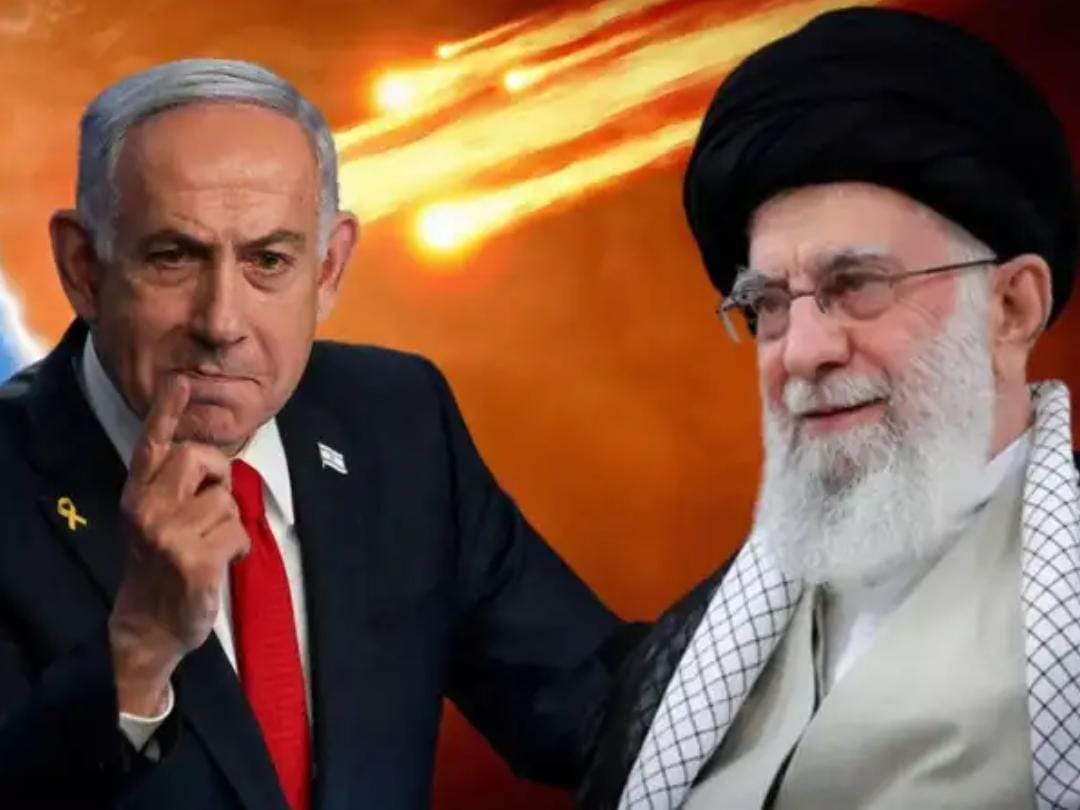

The Middle East is once again on fire, literally and politically. As tensions explode between Iran and Israel, what began as regional hostility is threatening to spiral into something much bigger. With drone strikes, cyber warfare, and whispers of nuclear retaliation, the stakes aren’t just local; they’re global. This isn’t just about two countries at odds; it’s about oil markets, powerful alliances, and a delicate geopolitical balance that could unravel at any moment. The conflict between the two nations was predominantly characterized by a tenuous atmosphere, as both parties discreetly engaged in fights while avoiding a full-blown war.
What led the adversarial relationship between Israel and Iran
Israel and Iran shared a strategic alliance in the 1950s during the tenure of Iran’s last sovereign, Shah Mohammad Reza Pahlavi. Nevertheless, this partnership ultimately deteriorated, evolving into a longstanding rivalry that has persisted since the Islamic Revolution in Iran in 1979, characterized by deep-seated mutual enmity. Israel perceives Iran’s nuclear aspirations as a profound threat to its very existence.
The hostilities emanate from the tail end of the protracted conflict between Israel and the Palestinian organization Hamas, which is backed by Iran. in October 2023, a day before the Hamas incursions in southern Israel, Israel and Hezbollah, the Lebanese organization, began exchanging fire across the Israeli frontier, leading to the loss of 1,139 lives and the capture of more than 200 individuals. Israel also commenced its retaliatory strikes against the besieged Gaza Strip, a conflict that has endured for almost a year. Since then, the countries have been involved in occasional confrontations, employing missiles and drones.
Before the June 13 attack on Iran by Israel, Iran launched a missile and drone attack on Israel in April 2024, marking the first exchange of direct blows between the two nations. This was responded to by an airstrike two weeks earlier on Iran’s diplomatic buildings in the Syrian capital, Damascus. However, Israel assassinated Ismail Haniyeh, who is a political leader of Hamas, in Iran’s capital in July, leading to another fight breakout with missile and air strikes between the two nations in October. On April 30, 2025, Iran executes Israeli foreign intelligence agents who partook in the killing of Guard Col. Hassan Sayyad Khodaei in Tehran in May 2022 and are said to work for Israel’s Mossad foreign intelligence agency.
June 13, “Operation Rising Lion”

Israel launched an attack on Iran on Friday, targeting nuclear and military sites. The attack reportedly killed top Iranian military officials, including Revolutionary Guards Commander Hossein Salami and Army Chief Mohammad Bagheri, along with many senior nuclear scientists, the IDF (Israel Defense Force) confirming the completion of the first phase of the strikes. Later, Israeli Prime Minister Benjamin Netanyahu released a video statement that the strikes were intended to undermine Iran’s nuclear weapons program, encompassing the Natanz enrichment facility and its ballistic missile infrastructure, asserting that the operation was indispensable for Israel’s survival. Massive damage seems to have been caused to several buildings, though it’s unclear to say with assurance if it was an intentional move from the Israeli officials. However, reports of an explosion in Tehran surfaced an hour before the statement. Images circulating in the aftermath of the attack depict strikes on residential buildings, suggesting that individual occupants were deliberately targeted alongside the facilities themselves.
The Israeli government asserts that this decision was predicated on the belief that Iran is nearing the completion of its nuclear weapons development, as this has been regarded in recent days as doomed to fail, and now it has had to be stopped completely. The Prime Minister confirmed that the attack was in the targeted locations that have nuclear enrichment facilities at Natanz, which is also renowned for its capability to produce highly enriched uranium, which are situated deep underground, meticulously for protection from air raids.
Reportedly, many high-profile Iranian leaders and commanders have been killed in the airstrikes; other sites targeted include a residence belonging to Iranian President Masoud Pezeshkian. After the completion of the first strikes, it is stated by the IDF that multiple air forces completed the opening strike, including the military targets and nuclear targets in various areas of Iran. They also stated, “The IDF had been conducting a lengthy process of assessments and preparations for the campaign at the front and in the rear. Civilian resilience will be an important component of the campaign.”
The airstrike involved over 200 aircraft engaged in five successive waves of assaults against Iran. Iran’s retaliation has already commenced, as Major General Abdolrahim Mousavi stated that ‘ we have received instructions from Imam Khamenei to punish the perpetrators of the crime and those who incited it.’
The United Nations issues a warning and calls for maximum restraint.

The United Nations is profoundly concerned as the devastating missile exchanges between the two nations result in an escalating toll on civilians, widespread displacement, and increasing regional instability. On Thursday, the UN High Commissioner for Human Rights, Volker Turk, urged “maximum restraint,” emphasizing that both Israel and Iran are obligated to adhere to international humanitarian law.
He stated that “the widescale, continuing attacks by Israel across Iran and the missile and drone strikes launched in response by Iran are inflicting severe human rights and humanitarian impacts on civilians and risk setting the whole region ablaze.” He also stressed that “the only way out of this spiraling illogic of escalation is maximum restraint, full respect for international law, and a return in good faith to the negotiating table.”
The UN condemned the attacks of both nations since June 13, causing massive damage to civilian infrastructure, which claimed hundreds of lives. According to the reports given by the Iranian authorities, at least 224 people have been killed, while human rights organizations believe it could be a significantly higher number. The Israeli officials report 24 fatalities and over 840 injuries thus far.